Ûsric was born of Eláric of Kora in the year 564 of the First Age of Telmérion, and he was raised in the traditions of his ancestors, devoted to the Seven and the One, though his special predilection was for Hæliána, the goddess of the ocean and of the growth of living things. And though never in his lifetime did he behold the wide expanse of water and wave unfold before him, though never did see with his mortal eye the beauty of the ocean, he spent the majority of his life in the woodlands of the Valley of Eréssa, radiant with a ravishing beauty all their own. His move into the wilderness was sparked by a rift between he and his father, or was the cause of it, as Eláric his father loved more than the beauty of the natural world the artifacts of man’s creation, the products of his energy and his will. Ûsric, rather, thought little of human creation and did not see how anything that man had made could compare with the beauty of a single tree or a single leaf, a sunrise or a sunset, or the slightest caress of wind upon the cheek.
When his father insisted that he embark upon the trade expected of him, to become a lumberman and a woodworker after his likeness and that of his two elder brothers, Ûsric refused. “I wish not to build houses for men, to provide them comfort and ease, and to direct their gazes upon themselves. I wish rather to lead men into the woods that they may love again the things that grow, that every year die away and yet rise again, that have life beyond our comprehension and beauty beyond our knowing.”
“Nay, my son,” said Eláric. “No right have you to dismiss that which, in my paternal authority, I saith unto you. Be humble and obey, and you shall prosper.”
“Obey you I would, did it not go against the deeper voice that sounds within my heart.” And so the son, rejecting his father’s will, departed from the parental house and took refuge in the lands far to the south. Aggrieved was his mother, and his sister too, younger than he by a year and dear to him as his own heart. But left he nonetheless and looked not back, so embittered was his heart with the hurt of his father’s demanding and with his own stubbornness of mind and will. Through the woodland he passed, following to its source a river that a times leaped swiftly over stones and at times flowed silent and deep, cradled between tall grasses and overhung with trees, silhouetted in light by day and standing stark against the starry sky by night. At the river’s source he found the destination that his heart sought, though until he beheld it he knew it not. A cavern, nestled at the edge of the uncharted forestlands that stretched unto the mountains, opened as if to welcome him, cut by some ancient hand or by the shifting of the earth or the unyielding blade of water. Two years he dwelt therein, foraging plants of all kinds to satisfy his hunger and drinking from the nearby river to quench his thirst.
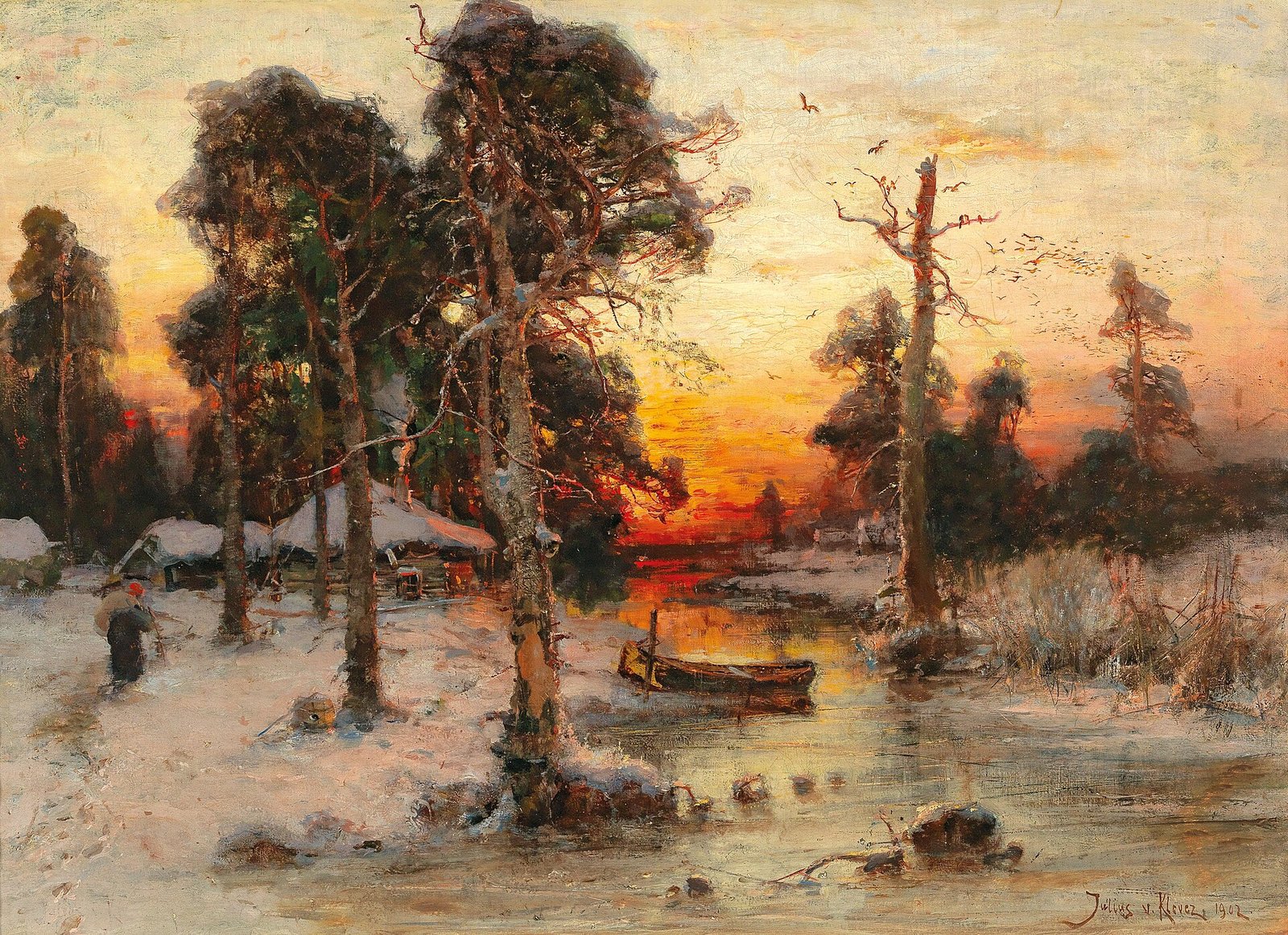
Often he lay out at night under the canopy of stars brilliant in their luminous song sounding silently, contemplating the auroreal ribbon as it wove its way across the sky and wrapped about the earth. And at day he labored hard in solitude, accompanied only by the song of the birds and the whisper of the wind in the trees, by the chill of autumn or early spring, or by the subtle warmth of summer. And in winter he endured, sheltering in his cavern with provisions laid up by months of effort, looking out at a landscape cloaked in a blanket of white, until the Great Thaw came, and the river’s surface cracked and flowed, and the first buds of the earliest lily poked up from beneath the snow.
Yet even in the midst of the beauty of the land, he felt many things of a nature far different in the recesses of his heart and mind. And in these two years he began to learn things that he did not expect, though at first he refused to acknowledge them. For he felt in this time the want of human company, and the hurt of loneliness, more than he had foreknown or thought. And because his solitude was chosen in bitterness, in flight, he could not find peace alone in Hæliána’s company, in her light. For his heart, closed to man in resentment, became closed also to the divine. And nature, too, so precious to him before his departure from his childhood home, seemed gradually and a times to turn on him and to wear the face of an enemy; and he suffered bitter cold, and illness, and hunger. The world which spoke to him of his lady’s beauty, and never ceased so to do, also showed itself ambivalent, and he learned that nature itself, as much as it reflects the divine, is not itself divine, but a fragment of primordial creative act, and something that, in times long past shrouded in the mystery of time and forgetfulness, was fractured and wounded as was wounded the very human heart.
Thus in the springtime as the second year of his sojourn came to a close, he returned to the village of his raising, to his family home, and though his penitence was sincere he did not intend long to remain. He said, somewhat begrudgingly (though in later years he would say it more freely), that his father had been, at least in part, in the right, and that he should not have departed with such division within his heart. And yet go again he must, he said, and yet more rightly now; and his sister chose to go with him, her name Elýsia, and two other companions of his youth, his friends Íllen and Hûdris. They departed two months hence from his return, and they traveled far into the woods to whose edge alone Ûsric had previously gone. And their purpose was to create a new way of living unlike that offered by their prior home, something simple and beautiful like the first days of the world. And beauty indeed there was, and simplicity, although for years yet to come much that was born of childish enthusiasm and youthful idealism would fade away and sink again into the sober beauty—more beautiful precisely for its sobriety—of reality.
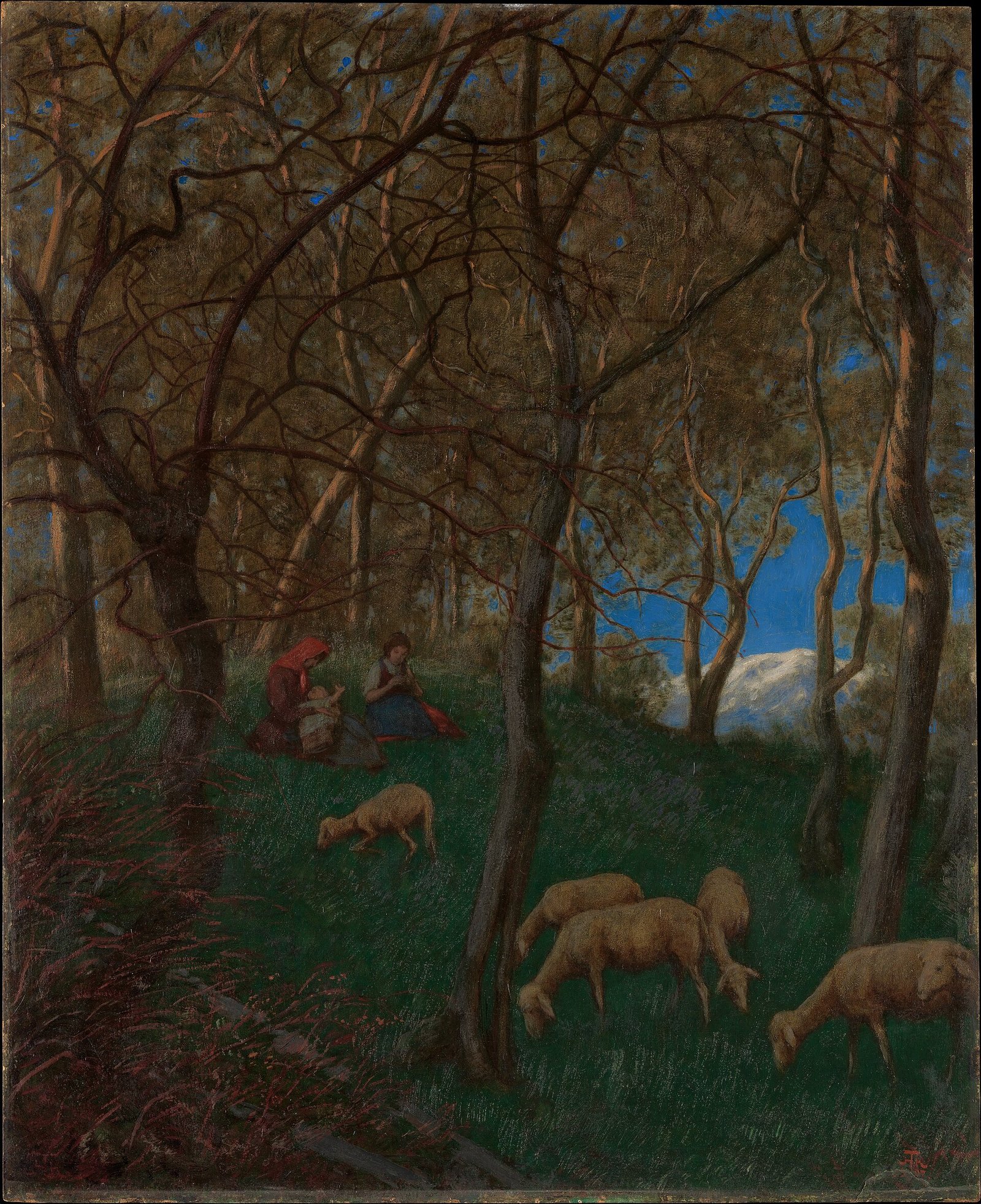
In these years a village was born, called by them Hinfast, meaning in their tongue “man-at-home-in-nature,” and Elýsia was wed to Hûdris, and Íllen departed again to his home, following their venture no longer, though upon his leaving four more came to take his place, hearing of what the three had since accomplished. One of these, a woman named Áwen, became Ûsric’s wife, and thus the village began to grow as new members awakened to life under the boughs of the trees ever enveloping, and the warmth of the hearth enlivening and enlightening. And the trees always stood, silent sentinels offering their branches and leaves to be plucked by the skilled fingers of the wind to sound their secret song, and the sky always wheeled overhead in its dance of day and night ever interchanging and yielding one to another, each with beauty its own yet shading into the beauty of the other.
For fifty years more Hinfast grew, whether from the families living within its confines or from migrants coming from afar, until it numbered nearly one-hundred inhabitants. And Ûsric, now an old man white of head and beard, bent from age and toil, looking upon the village that had grown from the seed of his hope and his planting, asked himself what he had accomplished. Was it good? Was it in accord with what he had, as a young man, seen and wished? In truth, if he had not been a more wise man than he was, he would have been disappointed indeed, for the village seemed to him more akin to the life he had left behind in fleeing his father’s home than it did to the idealism of his youth. And yet now he saw that, among all that might be imperfect, something genuine was born, and much also that would have been excessive or harmful was mitigated and restored to right and wholeness. For in his eyes beyond the slightest shadow of a doubt, Hinfast was beautiful, and it was good. The families who lived there had found a home and happiness according to humankind’s lot in the confines of this mortal life.
And he also looked upon the products of his own labor, the work of his own hands—the cabin he had built to shelter his wife and children from the elements, or those he had made for others, or the wall to protect the village from wild animals and bandits, or the artistic sculptures of stone and wood that lined his mantelpiece and which he also sold to nearby settlements—he looked upon the artifacts of his making, and he saw himself reflected within them. He saw himself more deeply now than he had for countless years before, and in this beholding he saw something he did not expect. In himself he beheld the image of his own father. “So this is what you meant, Ta,” he said unto himself, and to his father now long deceased. “Man and nature both are imperfect, yet beautiful, and together must strive ever upward to the place where alone beauty is undimmed and the form of all things is consummate, since aligned with the Source. I hope that my working, in both nature and art, has manifested this in some small way, and has also revealed me as a fitting son of such a loving father, who, for all of your weakness, have truly revealed to me the face of the Father of us all.”