WARNING: Do not read this unless you have first read the entirety of Dawnbringer: Lightborn, as, being a sequel, it has many significant spoilers.
Hældáris. 3rd Telmeric Age, Year 29 (V.Y. 1174)
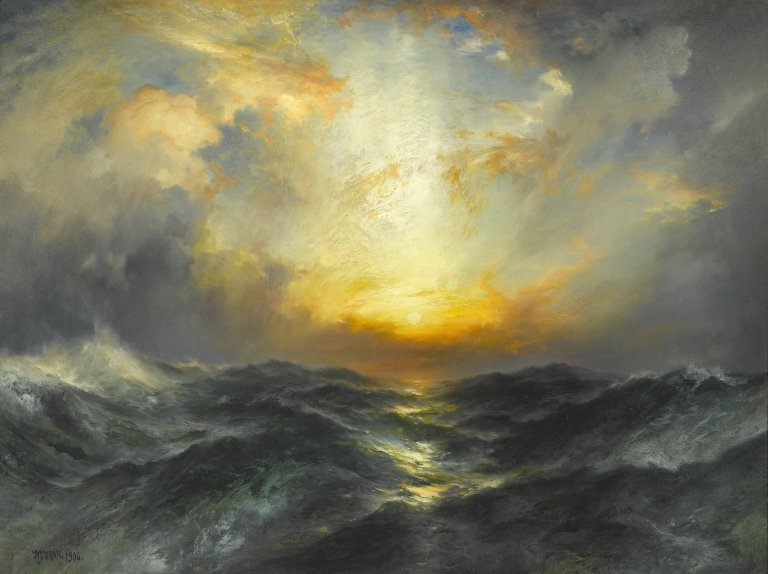
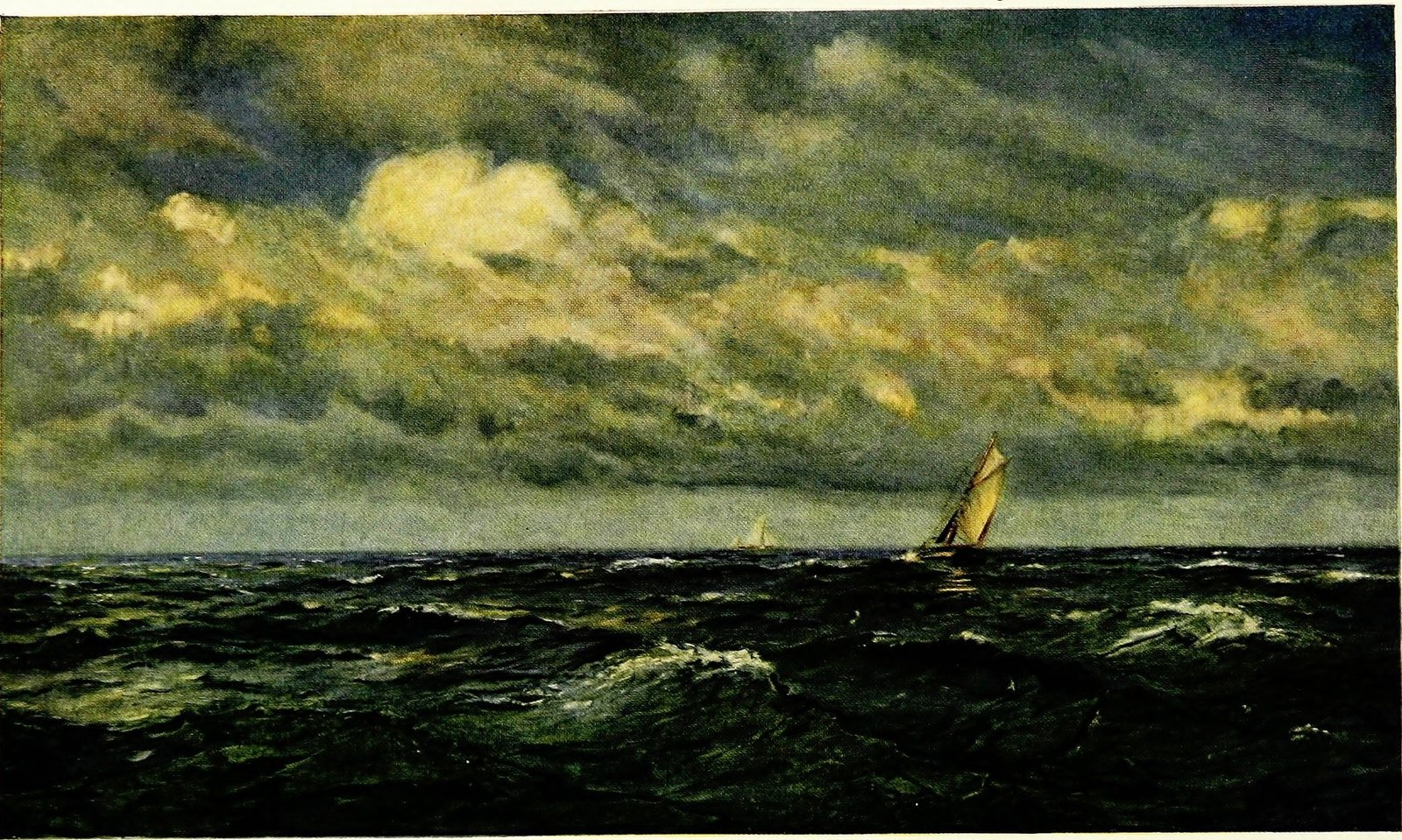
The waves crest white and full as the sea roils wildly under the touch of the stormy wind, spreading out beyond sight in every direction under a heavy sky sagging like water-drenched cloth full to bursting. The dance of the waves would be beautiful were it not for their danger, were it not for the threat of mishap for those whose lives are suspended upon the ocean’s waters in the sailing ship that for a month has been treading its way westward from the land of Telmérion toward that of Vælíria. Relmaríndë stands foremost upon the deck, at the very prow of the ship, not because she is any leader of those who care for the vessel and guide its course, but because she is the only one of her kindred for many leagues, and, as a child of the Ancient Kin, she feels it is her duty to give courage and hope to the others in the face of their fear. Her face is marked by the agelessness that is a trait common to all her people. She looks younger than she is, in the very contours of her face, which is noble and round in cheeks and chin with an arched nose and high, intelligent brows crowning eyes of piercing purity, and with flesh soft and radiant like that of an infant. But the gaze of these eyes, and the aura that seems to irresistibly emanate from her person, causes her to appear not only young but ancient, with a light of wisdom that seems always to be looking beyond what is seen, in a perception like that of a woman at the end of her years and facing the very portal of death; and yet this is always softened also by an immediacy of presence, of wonder-filled attentiveness to all that makes up this world, which is usually only seen in children. A man stands not far behind her, the son of the king, in whose blood flows the same heritage, though mingled now with two generations of mortal stock—an intermingling, however, that neither he nor she sees as anything but a boon, a beautiful union that brings benefit and enrichment, not degradation or loss. After all, the very ruler of the land, the promised king, showed in his own person that this “confluence,” this wedding of the people of the Velási and the people of Telmérion in a single heritage, was both a pact with the past and a promise of the future, a promise of harmony and of peace.
To all appearances the man and the woman seem to be siblings, with hair of a similar auburn hue, though the woman’s is more vibrant, like heads of wheat pierced through with the brilliant light of the setting sun as it bids its last twilight farewell before descending into night; the man’s hair, on the other hand, is more a ruddy brown with subtle hints of warmth, like mud on the side of the road before the soil is again overtaken by grass and growth. The same hint of agelessness and sight-beyond-seeing also shines in their eyes, hers a glistening blue and his a dark hazel green, though upon deeper inspection it appears that he has only a small portion—though enough for overflowing—of what lives fully in her. The man’s jaw is adorned by a thick but well-kept beard. And though the beard gives him a rugged appearance as though half of his countenance is embroiled in battle either against the bitter cold of his homeland or against the wildness that lies in the heart of every man, it does not entirely hide the contours of his face, which is wide and strong like that of his father, but gentle, too. As similar as the man and woman may appear, however, in fact they are not siblings, at least not born of the same father and mother, though their lives have been bound together inseparably by other bonds, both spiritual and legal, which surpass those which unite mere siblings in the flesh.
The stillness of these two who stand together at the prow of the ship, upon the forecastle as it narrows to a point cutting its way through the waves, contrasts greatly with the flurry of movement and sound that surrounds them, as the sailors bustle about making all possible preparations to weather the storm that draws near to them with dreadful certainty. Yet even as the two remain standing like sentinels, the woman turns to the man who is near her and says in a voice of gentle concern, “Hældáris, do you feel it?”
He does not immediately reply, as if her question has caught him by surprise and he must first attune to his own feelings to gauge to what she might be referring. At last he answers, “I feel the fear of the men—the sailors and the soldiers alike. The sailors sense, I think, the severity of the coming storm. As for those below deck, very few have ever departed from their own land upon the waves of the sea, and so any storm would be more than a little unsettling.”
“As it is for you?”
“Yes, as it is for me,” he admits. “It is my first time away, as you well know. And to be honest, I find little comfort and consolation in our current circumstances at this moment apart from your presence near to me, Relmaríndë.”
“And I am glad to be near,” she says, looking at him with tenderness in her eyes. “We pass through danger and into danger, and only behind us—where we cannot now go—lies any hope of a swift recovery of the peace that we have previously known.”
“If they have called for our aid from such a distance, I wish for nothing else but to pass into this danger, and through it, if only I may help in the reestablishment of peace for those who have lost it.”
“You speak words of courage. I pray that your heart, when tested, may find in itself that which you now so freely pledge, and which I know you truly intend. And you have that which can bring it forth when needed, and sustain it. For peace has been the cradle of your life, the fruit of the love of those who went before you,” Relmaríndë says. “And yet you are also still young. Do not misunderstand me. I do not mean to imply that you take such peace for granted. Rather, I think you cherish it deeply. And precisely because of this you feel in your heart the desire to become a fashioner of peace as well, and not only its recipient. This is why I am glad to accompany you on this journey, not merely as your protector but as your companion.” Such has been her manner of speaking since the first day that they met in the woods so many years ago. There is in her words, as there is in her mind, no duplicity, no dissimulation, no veiling of the truth through fear or through false shame. She speaks her mind in simplicity, and this makes her words both more trustworthy and more powerful than they would be otherwise. Indeed she is known by all to be one to whom any question may be posed if one has the courage and the desire for an answer born of truth, born of the inner seeing of the heart.
At this point the commotion behind the two has largely subsided as preparations are completed for the ship to weather the storm. A mysterious silence and stillness, within and beyond the noise of the stormy wind and sea, seem to descend upon them all. Even in the midst of the sound of the waves lapping against the hull of the boat and the wind whistling as the heavy storm clouds and thick sheets of rain draw ever nearer, in but a few more minutes to engulf the travelers entirely and to force them below deck, there is a moment in which time seems to stop, as if inhaling and exhaling slowly and with great deliberation. This is the silence and stillness that is but a deep breath before the plunge, a moment’s preparation before the contest. Recognizing this, both Hældáris and Relmaríndë linger in it for a moment, listening to its voice, and then the latter asks again, “Do you feel it?”
“You…you refer not to the fear of the people? No…of course you do not,” says Hældáris in reply. He then closes his eyes for a moment, as if the better to feel. When he opens them again, he continues, “I feel a force of great evil and malice, and also of incredible power. Is that to what you refer?”
“It is. The presence is subtle, and yet it is profound. I am not surprised that you did not feel it until now, for it is almost imperceptible, although growing. I fear very shortly its presence shall be all but overwhelming.”
“What is it?”
“I know not precisely,” replies the woman. “But I fear it is a creature of the deep, a creature born of darkness. And it may well be the cause of this storm, or at least a factor in its intensity. Only tales have my people heard of these creatures, though many things we see and experience in the hidden spaces of the heart where all things meet as in a great ocean containing countless ripples ever conjoining and communicating from heart unto heart.”
“And this is a creature,” remarks Hældáris, “whose presence in the ocean of being is both unwelcome and dangerous…”
Relmaríndë nods and takes a step toward Hældáris, as if doing so allows her to come more clearly to the point. “I spoke metaphorically of an ocean, as did you, but speaking of a literal ocean would also be true. I fear this creature is a mykkëvéngr, a great sea serpent.”
“It is one of the eötenga?” asks Hældáris.
“Aye. I think that alone explains the feeling that it stirs within us,” says Relmaríndë. “In my early days I felt them often encroaching upon the fringes of my consciousness, or even seeking to invade its center, until from our land they were expelled. What I feel now is the same.” And then, placing a hand upon his shoulder, she concludes, “But come, let us seek shelter from the storm before its full fury reaches us.”
† † †
“Think you that the mykkëvéngrwill attack us directly?” Hældáris asks when they have descended below deck.
“Let us pray not,” responds Relmaríndë. “That would, I expect, be the death of us. But we yet have reason to hope, as these creatures are rumored to take little interest in the affairs of men, and for long ages there has been hardly a word of their presence or activity. If they were truly inclined to interfere with humanity, then how has oceanic trade flourished between the different continents for these last many centuries?”
“Then why now do we sense this malicious presence with the approach of the storm? Are these creatures wont to throw tantrums at sea with none to witness them, and we have simply found ourselves unfortunately caught up in their midst?” asks Hældáris. But then he exhales deeply as his heart intuits a possible answer. “Or is it because it has first sensed us? Is that what you would say?”
“I fear so.”
“Is it you and I, then, who are endangering our company? What a woeful thing that a protector should become instead a threat to those they intend to safeguard!”
“Slow yourself, Hældáris,” interjects Relmaríndë. “Do not jump too quickly to conclusions, nor allow fear to cloud your judgment. What you say may have grounds in truth, but we do not see all possible ends of this affair, nor even the full measure of the conflict. If you are to be a guide and a stronghold for the men whom you lead into danger, then you must find more strength in the light that intangibly holds all things than in the darkness that would visibly assail it. Let not the first encounter with darkness stir you to panic.”
Bowing his head, his cheeks reddening in embarrassment, Hældáris replies softly, “You are, of course, entirely correct. I thank you for your words.”
Placing her hand for a moment upon the crown of his head, his long hair thick under her palm, Relmaríndë then raises Hældáris’ face and looks into his eyes, the same color and intensity as those of his aunt. “I do not intend to scold you,” she says. “There is no place in our relationship for such things. Just as you so often speak wisdom to me, so I hope I can for you. Take my words only as a reminder and an encouragement. You are strong in spirit and in body, and stronger yet I believe you shall be, when the crucible of conflict purifies you.”
“Provided we survive this first conflict to pass into yet others, and beyond them,” answers Hældáris, though the tone of his voice is no longer one of dread or discouragement, but of confidence flickering into flame as it stands face to face with fear. “May that be granted to us. For I never expected that something so drastic and so dire would greet us before our ship even reached the shores of Vælíria.”
“Nor did I,” remarks Relmaríndë, “but may it be granted to us, indeed.”
Changing the subject, Hældáris says, “But now I shall speak with the men of the coming storm. And then I suppose we have little choice but to endure it, hoping that it shall indeed prove nothing but a squall at sea, and not a confrontation with powers beyond our ken.”
And this he does, approaching his men either singly or in groups—as he finds them—and conversing with them of the storm and its dangers. Though he refrains from giving face or voice to the malevolent force that may reside within it, he does warn them to be ready for all eventualities. He also encourages them to seek, as they may, to aid the seamen who guide their passage so they need not bear the burden alone, even if little can they do with their lack of seafaring knowledge and expertise.
All the while that Hældáris does this, the man Aeyósha leans against a wall with his arms crossed over his chest, watching his childhood friend with a keen eye. “The men are worried,” he then says after Hældáris has spoken with everyone, drawing his attention to himself. “But we also have confidence in the purpose that has been entrusted to us by our king, in those who with their skill carry us across the waves, and in your leadership.”
“Thank you, Aeyósha,” replies Hældáris.
“Aye, and I speak honestly. However, you look worried, more than a mere storm, however serious, might warrant.”
“It is really nothing but what you said: the storm has me worried.”
“I do not believe you,” says Aeyósha, pushing off from the wall and standing face to face with his friend. He runs his hands thoughtfully for a moment through his bushy beard, the color of ripe grain or lightly baked bread, and as he inclines his head to look into the eyes of Hældáris, a couple veins on his brow, trailing up to the crown of his shaven head, are visible. Aeyósha is a large man standing at least three inches taller than all the other members of the company, a good six foot four inches, with a bulk of muscle evident even through his doublet from a lifetime of hard farm work and training with martial weapons. He is one of the “king’s men,” as they are called, ordinary laborers who through zeal for their kingdom and for the protection and well-being of their families have also taken up voluntary training in combat should circumstances ever call for their courage and prowess. And the cause for which they now sail, while not relating directly to the benefit of Telmérion and her people, nonetheless seemed enough to Aeyósha to merit his joining Hældáris and his company on their journey. A physically imposing man at first sight, he is indeed quite intense even in his personality, though not in cruelty or lack of compassion as rather in their opposite, and in the ardor of his convictions and the swiftness with which they are put into action. But when one gets to know him deeply, as has Hældáris since they were both young—Aeyósha being three years his senior and a friend and mentor from the days he could first speak—one realizes what a simple, humble, and unassuming man he is, indeed one of the “little people” who by their very ordinariness make nearly everyone feel at home in their presence.
Aeyósha reaches out and places both hands on Hældáris’ shoulders, as if to hold him in an iron grip of compassion and understanding, and, looking deep into his hazel eyes with his own a brilliant blue, he says, “You are worried for something else—something which you think it advisable to hide from the men. Am I not right?”
“Er-yes… You are right,” Hældáris admits, and he finds himself relieved to have voiced this truth to another whom he trusts so deeply, and immediately wonders why he ever thought to conceal it from him. “Relmaríndë and I sense that this storm may be caused by a beast in the water, one whose attention might be directed toward us.”
“Well, that is quite unfortunate,” replies Aeyósha, shaking his head. But then, straightening up and raising his chin slightly, he says, “Is this that mysterious heart-sense that you have tried to explain to me? That ‘feeling things that the eyes cannot see’?”
“Aye. Precisely that.”
“Well, while I believe that it is possible, and that if anyone would know about such things it would be the heirs of the king and the progeny of the Ancients—I must admit that I hope you are wrong in this case.”
“As do I, Aeyósha, as do I,” says Hældáris. “And even if we are not wrong, there is no certainty that it shall be any direct threat to us.”
“So are we to just wait and see, weathering the storm and hoping nothing comes of it but wind and rain?”
“Even if we wished it otherwise, there is nothing else that we can do but this.”
“Then we shall do willingly that which we must do by necessity,” concludes the gentle giant. “I shall keep an eye on the men for the moment. Why do you not sit down and rest? You have been on your feet all day. I trust you to tell me if anything more arises in the feelings of your heart, or if I may be of assistance in some other way. For my part I shall not hesitate to inform you of any changes or needs that arise among the men or our surroundings.”
“I will do that. Thank you, my friend.” After this Hældáris settles down in a corner of the main cabin, beside his sleeping bunk, and draws his knees to his chest, feeling the violent rocking of the ship all around him, hoping that they need only wait out the storm, though he cannot help instead expecting the moment when the worst shall come. And as he waits his mind carries him back to his own homeland which a month prior he had departed, setting sail from the great port city of Brûg’hil with the companions allotted to him. His mind carries him back to the fecund valley between the mountains that has been his lifelong home, his place of discovery and adventure, and the space where the wonder of childhood blossomed into the maturity and responsibility of adulthood.
† † †
The elder of two children, his sister Almaréä being two years younger than he, Hældáris grew up in the warm hearth’s embrace of a loving family that not only provided a sense of security from his earliest years but also taught him much regarding compassion and care for others both near and far. He witnessed from early on the responsibility that his father bore—both seriously and lightly—in the duties of his kingship and his custodianship of the people of Telmérion as they recovered and sought to secure life and well-being for themselves after the terrible years of the Imperial Occupation, the Stûnclad Rebellion, and the War of Darkness. The king was also a man known for his wisdom and the depth of his insight, traits born from years of suffering and loss and also from the crucible of his own failure, bringing to birth in him the compunction of heart that is the beginning of true understanding. Thus his was a heart open and sensitive not only to all who came seeking his aid, or who petitioned him from afar; but in addition he sought out those whom he might aid, or he sent trustworthy persons in his place. When it was a matter of upholding or formulating law, he had a special intuitive awareness of the universal principles of goodness, and also often of the way that these principles could be expressed in positive legislation or just decision-making. Hældáris witnessed all of this, and certainly it had a deep and lasting impact on the man that he himself in later years became. But in addition, his father was—and remains—also a man of profound personal attunement such that his external duties never, or at most rarely, made his son to feel like his father had no time for him, or that his needs, worries, and desires were a burden to him. And he did for his son what so few fathers seem to do: he played with him often, and spent time joining him in whatever games or adventures his son devised.
His mother, more soft-spoken and retiring than her husband, was tenderhearted and compassionate in equal measure, a woman of deep empathy; and even her natural tendency to melancholy, born of great grief undergone but not forgotten, did not hide her abiding, albeit quiet, joy. It would be wrong to say that their father was cheerfulness while their mother was sadness, but it is true that they each knew both realities thoroughly, and felt them not only in the cradle of their home but also in the many people whom they encountered throughout their life. And if there were one specific trait in the queen that stood out among all the others, it was that, even without Velási blood in her veins, she possessed such profound empathy that she was often able to give voice to another’s feelings before the person was even fully aware of these feelings themselves.
The court of the king was not enclosed within itself like the aristocratic hall of some self-styled lord, nor some wealthy palace far separated from the cares and anxieties of the poor and the common. No, for even with the reestablishment of the high kingship, the land of Telmérion retained—and indeed found anew in deeper measure—the spirit of equality that had always marked it. From the king’s own table, as it were, food was often shared with those in need were he to but hear about their plight. Or rather, this would be the case if the food ever made it to the table to begin with; but before he ever accepted food for himself and his family and allowed it to be set before them, he would inquire about who might be in need and spare for them all that was reasonable to spare (and in cases of particular need, sometimes more than was reasonable, though never to the harm of his children).
Hældáris also mingled freely with those his age who lived in the burgeoning town, Fian’cæhil, built in the wooded valley between the mountains; and though all knew (or came to know) that he was the firstborn of the king, he was a boy like any other and—since his father insisted on no separation or special treatment—he was accepted as a friend and playmate. There were, despite this, times when the parents of his friends would, as can happen, seek leverage with the king through his son. After all, no matter how benevolent or just a leader may be, it is part of the human condition in a marred world that some shall still seek status, position, or privilege in his eyes, that through favoritism or deceit his authority may be turned to their own personal gain.
From his boyhood through his early adulthood Hældáris studied much in many subjects, from the history of his people and of the wider world to commerce, economics, and politics, from the literature of Telmérion to the language of the peoples of Vælíria and Tel-Velfána, from the religion of the ancients to the burgeoning sciences, be they mathematical or astronomical or concerned with the organic living things of the world. He also trained, as is necessary for any man who is to become a king after his father, in the arts of combat; in this, he had the kind education and indeed companionship of a dear friend of his father, a man whose hands had known both the strife of war and the humble labor of peace, and who, since the first days when war finally gave way to peace, moved near to his king and friend and assisted him in all manner of things, befriending and training his children being one among them.
All in all, his early days were happy ones, in what was perhaps the most blessed time that the land of Telmérion had known since its wounding by the blindness and greed of men in ages long past. And one of the happiest days for him was the one in which, seemingly by chance, he happened upon Relmaríndë in the sun-dappled forest. Twenty years of age he was then, and in the beginnings of his manhood and full responsibility, starting to share in his proper way in the burdens and cares that lay upon the shoulders of his father. And the paternal care that he had known from his father had since blossomed into a kind of camaraderie, a true fellowship, that certainly strengthened Hældáris’ heart and, as he came to understand more and more, strengthened also the heart of the king. But at this age he began to think also of his own future family and the gift and task entrusted to him to carry on the line of kingship in the blood that he had received.
It was not a principle without exception in Telmérion that rule was carried on through hereditary means; indeed in many of the seven clans, which in the ascension of the high king were not abolished but re-established even from the very ashes of death and destruction in which they lay, rule was often either attained through feats of nobility or entrusted to one who received the support of the people. But in the case of the high kingship the matter was different; for this was no ordinary blood nor clan, but the custodianship of the memory and hope that had been promised to the people in ages long past, when the world was still young.
Relmaríndë appeared like a bolt of lightning out of a blue sky, or like a brilliant ray of light out of the darkness of midnight—that is, her arrival was as unexpected as it was consoling. Older she was than he by more than ten years, though her people counted age far differently, for even if she had been younger than he, she would in future outlive him by years innumerable. For she was one of the “deathless,” and as far as the evidence indicated, the sole survivor of her kind—yet she insisted otherwise, though she refused to say any more in this regard to prove the truth of her insistence. And knowing how different would be the trajectory of their lives, he had resisted for a long time any thought that there could be a union between them, a union of any kind but friendship and companionship.
But it seemed, far beyond his own imagining, that Hældáris appeared to the heart and mind of Relmaríndë as just as much a marvelous gift as she was to him. And so in his twenty-eighth year they were betrothed, and a year later wed. Neither of them at the time would have guessed that within but another three years they would depart from the shores of Telmérion for the land of Vælíria, in order to be mediators of peace—whether through diplomacy or arms—in the catastrophic events that threatened the very well-being and existence of that society, which only thirty or so years before had thrown off the yoke of Imperial tyranny and had attempted to rebuild itself as something new.
When the news came, the king was not slow in responding. Having lived through a crisis of civilization himself, he knew the pressing and delicate nature of such situations, and he called together his counselors and the hærási of the six other clans, or their representatives. And he read in their presence the missive that had arrived in the hands of a messenger who, with twenty companions, had traversed the ocean to seek their aid:
To the high king of Telmérion and the rulers of the clans,
We, the undersigned, address you with desperation in our hearts at the conflict surrounding us on all sides, conflict which seems far beyond our own powers now to confront or to overcome. Having heard of your wise and prudent rule, word of which has reached even across the seas to distant lands, we beseech you to come to our aid. But we lament that we know not even for what to ask; strength of arms or aid in battle we hesitate to directly request, for we know not if it would be right to wish for such. Perhaps diplomatic intervention and foreign emissaries may be enough to help tip the scales again in the direction of freedom and justice. Yet we also acknowledge that it is not possible for the rulers of your people, be they king or clan-leaders, to depart from your allotted station to traverse in danger for many months in order to bring us the aid of your wisdom or your strength of arms. And so we ask simply: send us what aid you deem fitting after you have read our account as contained below.
As you know, thirty-five years ago, in the year 1150 of our counting—since the colonization of our land by people from your own—a rebellion sparked into flame in response to the violent and unjust tyranny of the Emperor Maríndas IV and his forebears, and this toppled not only his governance with his demise, but also the structure of the Empire itself which had endured for numerous generations. Those were days of hope both strong and enthusiastic, indeed for many persons days in which hope reached almost unto folly, the fruits of which folly we now witness. For the Republic that has replaced the Empire has proven itself to be founded not upon solid foundations of right and truth, but upon the wishes and ideals of those who were artificers of its birth and establishment. Thus another group has arisen, with claims not unlike those raised with the first rebellion, and already the spark has turned to flame, and blood has once again wet the soil of our land. The cry is heard again as we heard it then—the claim that blood is the soil of the future and the price of peace.
Much of the heartland of our continent has already been buried under the heavy pall of warfare and conflict, and soon we believe it shall spread to all the clan-lands that have existed since days long past. One tyranny meets another, one worn in the open and one cloaked in fair words, though but a few decades ago the open was hidden and the fair was unveiled.
But we are weary. And weariness has turned to wariness. War is upon us, though we wish it not, and we seek to bring a peaceable solution to this conflict. But so far our deliberations have proved to be fruitless and our efforts at conciliation and agreement to be but yet more kindling to the fire. And so we turn to you, knowing full well how rare a thing it is that one nation ask for aid from another in its own internal governance, but aware too of our own folly, which has led to this impasse.
Send even, if you may, a delegation of men to mediate terms of peace, or if this fails, to side with those who seek to preserve peace and life rather than to destroy it, that perhaps a path may become visible before us that only a third party may bring. We seek only freedom for our people and an establishment of just rule—a reality so apparently simple which has yet escaped our grasp.
Know that we write this letter at risk to our own lives even from those who consider us “allies,” and that we count only on your mediation to justify our action should it prove ill for us.
Send back to us our company of messengers with word should you refrain from giving aid, or even better, have mercy and send to assist us what men you judge to be right. Those whom we have sent know well that it is also their part to protect and accompany any whom you send on their journey to our land.
Signed,
Adalvár Herísta, Fornst Fénrik, Eowald Íldris
Haléndi of the Republic of Vælíria
Much debate was sparked by the words of this missive, and the number of those who feared it was a ruse was not insignificant. Were these merely words of flattery meant to incline the ear to listen even despite the heart’s misgivings? And what was the true motive being communicated, not perhaps in the words, but behind them or even despite them? Was it really only a petition for a delegation to bring political counsel and aid, or was something more, or something different entirely, being sought? Unacquainted as even the governing officials of the land of Telmérion were with the interior situation in Vælíria, they did not recognize the names of these men who claimed to be “haléndi,” people’s representatives, in the young republic. Nonetheless, the tone of the letter was both dire and imploring, and even if the situation was not identical with that being portrayed, something indeed must be amiss to elicit such a plea. Thus, after lengthy deliberation it was decided that representatives of the clans of Galaptéä, Rhóvas, and Onylándis would be sent, accompanied each by a small contingent of warriors primarily for their own protection and for whatever eventualities may require might of arms—though it was hoped this measure would prove entirely unnecessary.
Three ships, and three companies—this was the decision upon which the council agreed. Hrísta Lórsen, second counselor of Onylándis, set out from the port of Oromardë with eighty men of arms and ten others whose skills lay not in combat but in affairs of the mind or in governance. From the clan of Rhóvas Íllis Renahær was sent, in smaller company than Hrísta but with equal boldness; he was a man well known for his assistance to the hæras and his vigorous pursuit of reform and rebuilding after the great losses during the War of Darkness. For the lands of Rhóvas were second only to those of Mineäs in the destruction they suffered during those years. Finally, Hældáris was sent on behalf of the clan of Galaptéä and in the name of the high king, his father, with the numbers already mentioned, and Relmaríndë was both his counsel and his support.
It was not the king who originally chose his son to be his representative on this dangerous quest. It was Hældáris himself who suggested it. “Father, I have trained long and with diligence to bear the crown after you,” he said, “and in this I would like to stand in your place, to do what you cannot do and yet to do it as you would do. No, it is not that I wish it; in fact I fear it. But I feel something within my heart calling me to it, as if I am meant to set out upon this journey. Consider it, if you must, a test of my fittingness to rule.”
“I wish for no such test, my son,” the king replied. “I would not send you even to another village as a test of your fittingness. It is you who have been given to me, and you have shown the integrity of your heart again and again. A fool would I be were I to put you to the test in such a manner.”
“Then not a test,” Hældáris insisted. “But I feel called to go nonetheless. Allow me, I ask you, to depart on this journey not to prove myself to you, but rather to live in truth according to what you have taught me: to come always to the aid of those in need.”
“Now that is something else altogether,” his father replied with a deep sorrow in his eyes, but also a kindness that held joy born of profound trust. “That is something which I must take into the silence of the heart, into the entreaty of the spirit, to listen to the only voice that may rightly say yea or nay.” Seeing Hældáris’ crestfallen face, the king immediately added, “But worry not! If what you hear is true, then it can come from only one source. Then, if I too listen aright, I shall surely hear the same. So trust and await my answer. I shall not delay.”
And so it was that, beyond the expectation or desire of either man, father or son, they both discerned the truth of this task. And it was a fitting choice indeed, though painful to both of them, for even the natural reason of the mind indicated in countless ways that Hældáris was the best person to take his father’s place. But where limited human sight could go wrong, trust alone would take its place, and so both had to step into surrender beyond the uncertainty that lay before them. And Hældáris suffered no delusions that the choice was easy for his father; he saw it clearly in his face when he voiced his approval, and he saw it in his tears when he bid his son farewell, drawing him tenderly into his embrace, this same embrace that had been an abiding source of joy and security through all the years of his life. He hoped with all the fiber of his soul that he would return again to see his father’s loving eyes once again, and to feel the warmth and kindness of his embrace.her face, which is noble and round in cheeks and chin with an arched nose and high, intelligent brows crowning eyes of piercing purity, and with flesh soft and clean like that of an infant. But the gaze of these eyes, and the aura that seems to irresistibly emanate from her person, causes her to appear not only young but ancient, with a light of wisdom that seems always to be looking beyond what is seen, in a perception like that of a woman at the end of her years and facing the very portal of death; and yet this is always softened also by an immediacy of presence, of wonder-filled attentiveness to all that makes up this world, which is usually only seen in children. A man stands not far behind her, the son of the king, in whose blood flows the same heritage, though mingled now with two generations of mortal stock—an intermingling, however, that neither he nor she sees as anything but a boon, a beautiful union that brings benefit and enrichment, not degradation or loss. After all, the very ruler of the land, the promised king, showed in his own person that this “confluence,” this wedding of the people of the Velási and the people of Telmérion in a single heritage, was both a pact with the past and a promise of the future, a promise of harmony and of peace.
To all appearances the man and the woman seem to be siblings, with hair of a similar auburn hue, though the woman’s is more vibrant, like heads of wheat pierced through with the brilliant light of the setting sun as it bids its last twilight farewell before descending into night; the man’s hair, on the other hand, is more a ruddy brown with subtle hints of warmth, like mud on the side of the road before the soil is again overtaken by grass and growth. The same hint of agelessness and sight-beyond-seeing also shines in their eyes, hers a glistening blue and his a dark hazel green, though upon deeper inspection it appears that he has only a small portion—though enough for overflowing—of what lives fully in her. The man’s jaw is adorned by a thick but well-kept beard. And though the beard gives him a rugged appearance as though half of his countenance is embroiled in battle either against the bitter cold of his homeland or against the wildness that lies in the heart of every man, it does not entirely hide the contours of his face, which is wide and strong like that of his father, but gentle, too. As similar as the man and woman may appear, however, in fact they are not siblings, at least not born of the same father and mother, though their lives have been bound together inseparably by other bonds, both spiritual and legal, which surpass those which unite mere siblings in the flesh.
The stillness of these two who stand together at the prow of the ship, upon the forecastle as it narrows to a point cutting its way through the waves, contrasts greatly with the flurry of movement and sound that surrounds them, as the sailors bustle about making all possible preparations to weather the storm that draws near to them with dreadful certainty. Yet even as the two remain standing at the forefront of the ship, the woman turns to the man who is near her and says in a voice of gentle concern, “Hældáris, do you feel it?”
He does not immediately reply, as if her question has caught him by surprise and he must first attune to his own feelings to gauge to what she might be referring. At last he answers, “I feel the fear of the men—the sailors and the soldiers alike. The sailors sense, I think, the severity of the coming storm. As for those below deck, very few have ever departed from their own land upon the waves of the sea, and so any storm would be more than a little unsettling.”
“As it is for you?”
“Yes, as it is for me,” he admits. “It is my first time away, as you well know. And to be honest, I find little comfort and consolation in our current circumstances at this moment apart from your presence near to me, Relmaríndë.”
“And I am glad to be near,” she says, looking at him with tenderness in her eyes. “We pass through danger and into danger, and only behind us—where we cannot now go—lies any hope of a swift recovery of the peace that we have previously known.”
“If they have called for our aid from such a distance, I wish for nothing else but to pass into this danger, and through it, if only I may help in the reestablishment of peace for those who have lost it.”
“You speak words of courage. I pray that your heart, when tested, may find in itself that which you now so freely pledge, and which I know you truly intend. And you have that which can bring it forth when needed, and sustain it. For peace has been the cradle of your life, the fruit of the love of those who went before you,” Relmaríndë says. “And yet you are also still young. Do not misunderstand me. I do not mean to imply that you take such peace for granted. Rather, I think you cherish it deeply. And precisely because of this you feel in your heart the desire to become a fashioner of peace as well, and not only its recipient. This is why I am glad to accompany you on this journey, not merely as your protector but as your companion.” Such has been her manner of speaking since the first day that they met in the woods so many years ago. There is in her words, as there is in her mind, no duplicity, no dissimulation, no veiling of the truth through fear or through false shame. She speaks her mind in simplicity, and this makes her words both more trustworthy and more powerful than they would be otherwise. Indeed she is known by all to be one to whom any question may be posed if one has the courage and the desire for an answer born of truth, born of the inner seeing of the heart.
At this point the commotion behind the two has largely subsided as preparations are completed for the ship to weather the storm. A mysterious silence and stillness, within and beyond the noise of the stormy wind and sea, seem to descend upon them all. Even in the midst of the sound of the waves lapping against the hull of the boat and the wind whistling as the heavy storm clouds and thick sheets of rain draw ever nearer, in but a few more minutes to engulf the travelers entirely and to force them below deck, there is a moment in which time seems to stop, as if inhaling and exhaling slowly and with great deliberation. This is the silence and stillness that is but a deep breath before the plunge, a moment’s preparation before the contest. Recognizing this, both Hældáris and Relmaríndë linger in it for a moment, listening to its voice, and then the latter asks again, “Do you feel it?”
“You…you refer not to the fear of the people? No…of course you do not,” says Hældáris in reply. He then closes his eyes for a moment, as if the better to feel. When he opens them again, he continues, “I feel a force of great evil and malice, and also of incredible power. Is that to what you refer?”
“It is. The presence is subtle, and yet it is profound. I am not surprised that you did not feel it until now, for it is almost imperceptible, although growing. I fear very shortly its presence shall be all but overwhelming.”
“What is it?”
“I know not precisely,” replies the woman. “But I fear it is a creature of the deep, a creature born of darkness. And it may well be the cause of this storm, or at least a factor in its intensity. Only tales have my people heard of these creatures, though many things we see and experience in the hidden spaces of the heart where all things meet as in a great ocean containing countless ripples ever conjoining and communicating from heart unto heart.”
“And this is a creature,” remarks Hældáris, “whose presence in the ocean of being is both unwelcome and dangerous…”
Relmaríndë nods and takes a step toward Hældáris, as if doing so allows her to come more clearly to the point. “I spoke metaphorically of an ocean, as did you, but speaking of a literal ocean would also be true. I fear this creature is a mykkëvéngr, a great sea serpent.”
“It is one of the eötenga?” asks Hældáris.
“Aye. I think that alone explains the feeling that it stirs within us,” says Relmaríndë. “In my early days I felt them often encroaching upon the fringes of my consciousness, until from our land they were expelled. What I feel now is the same.” And then, placing a hand upon his shoulder, she concludes, “But come, let us seek shelter from the storm before its full fury reaches us.”
† † †
“Think you that the mykkëvéngr will attack us directly?” Hældáris asks when they have descended below deck.
“Let us pray not,” responds Relmaríndë. “That would, I expect, be the death of us. But we yet have reason to hope, as these creatures are rumored to take little interest in the affairs of men, and for long ages there has been hardly a word of their presence or activity. If they were truly inclined to interfere with men, then how has oceanic trade flourished between the different continents for these last many centuries?”
“Then why now do we sense this malicious presence with the approach of the storm? Are these creatures wont to throw tantrums at sea with none to witness them, and we have simply found ourselves unfortunately caught up in their midst?” asks Hældáris. But then he exhales deeply as his heart intuits a possible answer. “Or is it because it has first sensed us? Is that what you would say?”
“I fear so.”
“Is it you and I, then, who are endangering our company? What a woeful thing that a protector should become instead a threat to those they intend to safeguard!”
“Slow yourself, Hældáris,” interjects Relmaríndë. “Do not jump too quickly to conclusions, nor allow fear to cloud your judgment. You do not see all possible ends of this affair, nor even the full measure of the conflict. If you are to be a guide and a stronghold for the men whom you lead into danger, then you must find more strength in the light that intangibly holds all things than in the darkness that would visibly assail it. Let not the first encounter with darkness stir you to panic.”
Bowing his head, his cheeks reddening in embarrassment, Hældáris replies softly, “You are, of course, entirely correct. I thank you for your words.”
Placing her hand for a moment upon the crown of his head, his long hair thick under her palm, Relmaríndë then raises Hældáris’ face and looks into his eyes, the same color and intensity as those of his aunt. “I do not intend to scold you,” she says. “Take my words only as a reminder and an encouragement. You are strong in spirit and in body, and stronger yet I believe you shall be, when the crucible of conflict purifies you.”
“Provided we survive this first conflict to pass into yet others, and beyond them,” answers Hældáris, though the tone of his voice is no longer one of dread or despair, but of confidence flickering into flame as it stands face to face with fear. “May that be granted to us. For I never expected that something so drastic and so dire would greet us before our ship even reached the shores of Væliria.”
“May it be granted to us, indeed,” remarks Relmaríndë.
“But now I shall speak with the men of the coming storm,” Hældáris says. “And then I suppose we have little choice but to endure it, hoping that it shall indeed prove nothing but a squall at sea, and not a confrontation with powers beyond our ken.”
And this he does, approaching his men either singly or in groups—as he finds them—and conversing with them of the storm and its dangers. Though he refrains from giving face or voice to the malevolent force that might reside within it, he does warn them to be ready for all eventualities. He also encourages them to seek, as they may, to aid the seamen who guide their passage so they need not bear the burden alone, even if little can they do with their lack of seafaring knowledge and expertise.
All the while that Hældáris does this, the man Aeyósha leans against a wall with his arms crossed over his chest, watching his childhood friend with a keen eye. “The men are worried,” he then says after Hældáris has spoken with everyone, drawing his attention to himself. “But we also have confidence in the purpose that has been entrusted to us by our king, in those who with their skill carry us across the waves, and in your leadership.”
“Thank you, Aeyósha,” replies Hældáris.
“Aye, and I speak honestly. However, you look worried, more than a mere storm, however serious, might warrant.”
“It is really nothing but what you said: the storm has me worried.”
“I do not believe you,” says Aeyósha, pushing off from the wall and standing face to face with his friend. He runs his hands thoughtfully for a moment through his bushy beard, the color of ripe grain or lightly baked bread, and as he inclines his head to look into the eyes of Hældáris, a couple veins on his brow, trailing up to the crown of his shaven head, are visible. Aeyósha is a large man standing at least three inches taller than all the other members of the company, a good six foot four inches, with a bulk of muscle evident even through his doublet from a lifetime of hard farm work and training with martial weapons. He is one of the “king’s men,” as they are called, ordinary laborers who through zeal for their kingdom and for the protection and well-being of their families have also taken up voluntary training in combat should circumstances ever call for their courage and prowess. And the cause for which they now sail, while not relating directly to the benefit of Telmérion and her people, nonetheless seemed enough to Aeyósha to merit his joining Hældáris and his company on their journey. A large and imposing man at first sight, he is indeed quite intense even in his personality, though not in cruelty or lack of compassion as rather in their opposite, and in the ardor of his convictions and the swiftness with which they are put into action. But when one gets to know him deeply, as has Hældáris since they were both young—Aeyósha being three years his senior and a friend and mentor from the days he could first speak—one realizes what a simple, humble, and unassuming man he is, indeed one of the “little people” who by their very ordinariness make nearly everyone feel at home in their presence.
Aeyósha reaches out and places both hands on Hældáris’ shoulders, as if to hold him in an iron grip of compassion and understanding, and looking deep into his hazel eyes with his own a brilliant blue, he says, “You are worried for something else—something which you think it advisable to hide from the men. Am I not right?”
“Er-yes… You are right,” Hældáris admits, and he finds himself relieved to have voiced this truth to another whom he trusts so deeply, and immediately wonders why he ever thought to conceal it from him. “Relmaríndë and I sense that this storm may be caused by a beast in the water, one whose attention might be directed toward us.”
“Well, that is quite unfortunate,” replies Aeyósha, shaking his head. But then, straightening up and raising his chin slightly, he says, “Is this that mysterious heart-sense that you once tried to explain to me? That ‘feeling things that the eyes cannot see’?”
“Aye. Precisely that.”
“Well, while I believe that it is possible, and that if anyone would know about such things it would be the heirs of the king and the progeny of the Ancients—I must admit that I hope you are wrong in this case.”
“As do I, Aeyósha, as do I,” says Hældáris. “And even if we are not wrong, there is no certainty that it shall be any direct threat to us.”
“So we just wait and see, weathering the storm and hoping nothing comes of it but wind and rain?”
“Even if we wished it otherwise, there is nothing else that we can do but this.”
“Then we shall do willingly that which we cannot avoid doing,” concludes the gentle giant. “I shall keep an eye on the men for the moment. Why don’t you sit down and rest? You have been on your feet all day. I shall trust you to tell me if anything more arises in the feelings of your heart, or if I may be of assistance in some way. For my part I shall not hesitate to inform you of any changes or needs that arise among the men or our surroundings.”
“I will do that. Thank you.” After this Hældáris settles down in a corner of the main cabin, beside his sleeping bunk, and draws his knees to his chest, feeling the violent rocking of the ship all around him, hoping that they need only wait out the storm, though he cannot help instead awaiting the moment when the worst shall come. And as he waits his mind carries him back to his own homeland which a month prior he had departed, setting sail from the great port city of Brûg’hil with the companions allotted to him. His mind carries him back to the fecund valley between the mountains that has been his lifelong home, his place of discovery and adventure, and the space where the wonder of childhood blossomed into the maturity and responsibility of adulthood.
The elder of two children, his sister Almaréä being two years younger than he, Hældáris grew up in the warm hearth’s embrace of a loving family that not only provided a sense of security from his earliest years but also taught him much regarding compassion and care for others both near and far. He witnessed from early on the responsibility that his father bore—both seriously and lightly—in the duties of his kingship and his custodianship of the people of Telmérion as they recovered and sought to secure life and well-being for themselves after the terrible years of the Imperial Occupation, the Stûnclad Rebellion, and the War of Darkness. The king was also a man known for his wisdom and the depth of his insight, traits born from years of suffering and loss and also from the crucible of his own failure, bringing to birth in him the compunction of heart that is the beginning of true understanding. Thus his was an open and sensitive heart not only to all who came seeking his aid, or who petitioned him from afar; but in addition he sought out those whom he might aid, or he sent trustworthy persons in his place. When it was a matter of upholding or formulating law, he had a special intuitive awareness of the universal principles of goodness, and also often of the way that these principles could be expressed in positive legislation or just decision-making. Hældáris witnessed all of this, and certainly it had a deep and lasting impact on the man that he himself in later years became. But in addition to all of this, his father was—and remains—also a man of profound personal attunement such that his external duties never, or at most rarely, made his son to feel like his father had no time for him, or that his needs, worries, and desires were a burden to him. And he did for his son what so few fathers seem to do: he played with his son often, and spent time joining him in whatever games or adventures his son devised.
His mother was tenderhearted and compassionate in equal measure, a woman of deep empathy; and even her natural tendency to melancholy, born of great grief undergone but not forgotten, did not hide her abiding, albeit quiet, joy. It would be wrong to say that their father was cheerfulness while their mother was sadness, but it is true that they knew both realities thoroughly, and felt them not only in the cradle of their home but also in the many people whom they encountered throughout their life.
For the court of the king was not enclosed within itself like the aristocratic hall of some self-styled lord, nor some wealthy palace far separated from the cares and anxieties of the poor and the common. No, for even with the reestablishment of the high kingship, the land of Telmérion retained—and indeed found anew in deeper measure—the spirit of equality that had always marked it. From the king’s own table, as it were, food was oft shared with those in need were he to but hear about their plight. Or rather, this would be the case if the food ever made it to the table to begin with; but before he ever accepted food for himself and his family and allowed it to be set before them, he would inquire about who might be in need and spare for them all that was reasonable to spare (and in cases of particular need, sometimes more than was reasonable, though never to the harm of his children).
Hældáris also mingled freely with those his age who lived in the burgeoning town, Fian’cæhil, built in the wooded valley between the mountains; and though all knew (or came to know) that he was the firstborn son of the king, he was a boy like any other and—since his father insisted on no separation or special treatment—he was accepted as a friend and playmate. There were, despite all this, times when the parents of his friends would, as can happen, seek leverage with the king through his son. After all, no matter how benevolent or just a leader may be, it is part of the human condition in a marred world that some shall still seek status, position, or privilege in his eyes.
From his boyhood through his early adulthood Hældáris studied much in many subjects, from the history of his people and of the wider world to commerce, economics, and politics, from the literature of Telmérion to the language of the peoples of Væliria and Tel-Velfána, from the religion of the ancients to the burgeoning sciences, be they mathematical or astronomical or concerned with the organic living things of the world. He also trained, as is necessary for any man who is to become a king after his father, in the arts of combat; in this, he had the kind education and indeed companionship of a dear friend of his father, a man whose hands had known both the strife of war and the humble labor of peace, and who, since the first days when war finally gave way to peace, moved near to his king and friend and assisted him in all manner of things, befriending and training his children being one among them.
So, all in all, his early days were happy ones, in what was perhaps the most blessed time that the land of Telmérion had known since its wounding by the blindness and greed of men in ages long past. And one of the happiest days for him was the one in which, seemingly by chance, he happened upon Relmaríndë in the sun-dappled forest. Twenty years of age he was then, and in the beginnings of his manhood and full responsibility, starting to share in his proper way in the burdens and cares that lay upon the shoulders of his father. And the paternal care that he had known from his father had since blossomed into a kind of camaraderie, a true fellowship, that certainly strengthened Hældáris’ heart and, as he came to know more and more, strengthened also the heart of the king. But at this age he began to think also of his own future family and the gift and task entrusted to him to carry on the line of kingship in the blood that he had received.
It was not a principle without exception in Telmérion that rule was carried on through hereditary means; indeed in many of the seven clans, which in the ascension of the high king were not abolished but re-established even from the very ashes of death and destruction in which they lay, rule was often either attained through feats of nobility or entrusted to one who received the support of the people. But in the case of the high kingship it was different; for this was no ordinary blood nor clan, but the custodianship of the memory and hope that had been promised to the people long past, when the world was still young.
Relmaríndë appeared like a bolt of lightning out of a blue sky, or like a brilliant ray of light out of the darkness of midnight—that is, her arrival was as unexpected as it was consoling. Older she was than he by more than ten years, though her people counted age far differently, for even if she had been younger than he, she would outlive him by years innumerable. For she was one of the “deathless,” and as far as he knew, the sole survivor of her kind—yet she insisted otherwise, though she refused to say any more in this regard to prove the truth of her insistence. And knowing how different would be the trajectory of their lives, he had resisted for a long time any thought that there could be a union between them, a union of any kind but friendship and companionship.
But it seemed, far beyond his own imagining, that Hældáris appeared to the heart and mind of Relmaríndë as just as much a marvelous gift as she was to him. And so in his twenty-eighth year they were betrothed, and a year later wed. Neither of them at the time would have guessed that within but another three years they would depart from the shores of Telmérion for the land of Væliria, all in order to be mediators of peace—whether through diplomacy or arms—in the catastrophic events that threatened the very well-being and existence of that society, which only thirty or so years before had thrown off the yoke of Imperial tyranny and had tried to rebuild itself as something new.
When the news came, the king was not slow in responding. Having lived through a crisis of civilization himself, he knew the pressing and delicate nature of such situations, and he called together his counselors and the hærási of the six other clans, or their representatives. And he read in their presence the missive that had arrived in the hands of a messenger who, with twenty companions, had traversed the ocean to seek their aid:
To the high king of Telmérion and the rulers of the clans,
We, the undersigned, address you with desperation in our hearts at the conflict surrounding us on all sides, conflict which seems far beyond our own powers now to confront or to overcome. Having heard of your wise and prudent rule, word of which has reached even across the seas to distant lands, we beseech you to come to our aid. But we lament that we know not even for what to ask; for strength of arms or aid in battle we hesitate to directly request, for we know not if it would be right to wish for such. Yet we also acknowledge that it is not possible for the rulers of your people, be they king or clan-leaders, to depart from your allotted station to traverse in danger for many months in order to bring us the aid of your wisdom or your strength of arms. And so we ask simply: send us what aid you deem fitting after you have read our account as contained below.
As you know, thirty-five years ago, in the year 1150 of our counting—since the colonization of our land by people from your own—a rebellion sparked into flame in response to the violent and unjust tyranny of the Emperor Maríndas IV and his forebears, and this toppled not only his governance with his demise, but also the structure of the Empire itself which had endured for numerous generations. Those were days of hope both strong and enthusiastic, indeed for many persons days in which hope reached almost to folly, the fruits of which folly we now witness. For the Republic that has replaced the Empire has proven itself to be founded not upon solid foundations of right and truth, but upon the wishes and ideals of those who were artificers of her birth and establishment. Thus another group has arisen, with claims not unlike those raised with the first rebellion, and already the spark has turned to flame, and blood has once again wet the soil of our land. The cry is heard again as we heard it then—the claim that blood is the soil of the future and the price of peace.
But we are weary. And weariness has turned to wariness. War is upon us, though we wish it not, and we seek to bring a peaceable solution to this conflict. But so far our deliberations have proved fruitless and our efforts at conciliation and agreement to be but yet more kindling to the fire. And so we turn to you, knowing full well how rare a thing it is that one nation ask for aid from another in its own internal governance, but aware too of our own folly, which has led to this impasse.
Send even, if you may, a delegation of men to mediate terms of peace, or if this fails, to side with those who seek to preserve peace and life rather than to destroy it, that perhaps a path may become visible before us that only a third party may bring. We seek only freedom for our people and an establishment of just rule—a reality so apparently simple which has yet escaped our grasp.
Know that we write this letter at risk to our own lives even from those who consider us “allies,” and that we count only on your mediation to justify our action should it prove ill for us.
Send back to us our company of messengers with word should you refrain from giving aid, or even better, have mercy and send to assist us what men you judge to be right. Those whom we have sent know well that it is also their part to protect and accompany any whom you send on their journey to our land.
Signed,
Adalvár Herísta, Fornst Fénrik, Eowald Íldris
Haléndi of the Republic of Vælíria
Much debate was sparked by the words of this missive, and the number of those who feared it was a ruse was not insignificant. Were these merely words of flattery meant to incline the ear to listen even despite the heart’s misgivings? And what was the true motive being communicated, not perhaps in the words, but behind them or even despite them? Was it really only a petition for a delegation to bring political counsel and aid, or was something more, or something different entirely, being sought? Unacquainted as even the governing officials of the land of Telmérion were with the interior situation in Væliria, they did not recognize the names of these men who claimed to be “haléndi,” people’s representatives, in the young republic. Nonetheless, the tone of the letter was both dire and imploring, and even if the situation was not identical with that being portrayed, something indeed must be amiss to elicit such a plea. Thus, after lengthy deliberation it was decided that representatives of the clans of Galaptéä, Rhóvas, and Onylándis would be sent, accompanied each by a small contingent of warriors primarily for their own protection and for whatever eventualities may require might of arms—though it was hoped this measure would prove entirely unnecessary.
Three ships, and three companies—this was the decision upon which the council agreed. Hrísta Lórsen, second counselor of Onylándis, set out from the port of Oromardë with eighty men of arms and ten others whose skills lay not in combat but in affairs of the mind or in governance. From the clan of Rhóvas Íllis Renahær was sent, in smaller company than Hrísta but with equal boldness; he was a man well known for his assistance to the hæras and his vigorous pursuit of reform and rebuilding after the great losses during the War of Darkness. For the lands of Rhóvas were second only to those of Mineäs in the destruction they suffered during those years. Finally, Hældáris was sent on behalf of the clan of the Galaptéä and in the name of the high king, his father, with the numbers already mentioned, and Relmaríndë was both his counsel and his support.
But more needs to be said about how this last state of affairs came about. It was not the king who originally chose his son to be his representative on this dangerous quest. It was Hældáris himself who suggested it.
“Father, I have trained long and with diligence to bear the crown after you,” he said, “and in this I would like to stand in your place, to do what you cannot do and yet to do it as you would do. No, it is not that I wish it; in fact I fear it. But I feel something within my heart calling me to it, as if I am meant to set out upon this journey. Consider it, if you must, a test of my fittingness to rule.”
“I wish for no such test, my son,” the king replied. “I would not send you even to another room as a test of your fittingness. It is you who have been given to me, and you have shown the integrity of your heart again and again. A fool would I be were I to put you to the test in such a manner.”
“Then not a test,” Hældáris insisted. “But I feel called to go nonetheless. Allow me, I ask you, to depart on this journey not to prove myself to you, but rather to live in truth according to what you have taught me: to come always to the aid of those in need.”
“Now that is something else altogether,” his father replied with a deep sorrow in his eyes, but also a kindness that held joy born of profound trust. “That is something which I must take into the silence of the heart, into the entreaty of the spirit, to listen to the only voice that may rightly say yea or nay.” Seeing Hældáris’ crestfallen face, the king immediately added, “But worry not! If what you hear is true, then it can come from only one source. Then, if I too listen aright, I shall surely hear the same. So trust and await my answer. I shall not delay.”
And so it was that, beyond the expectation or desire of either man, father or son, they both discerned the truth of this task. And it was a fitting choice indeed, though painful to both of them, for even the natural reason of the mind indicated in countless ways that Hældáris was the best person to take his father’s place. But where limited human sight can go wrong, trust alone can take its place, and so both had to step into surrender beyond the uncertainty that lay before them. And Hældáris suffered no delusions that the choice was easy for his father; he saw it clearly in his face when he voiced his approval, and he saw it in his tears when he bid his son farewell, drawing him tenderly into his embrace, this same embrace that had been an abiding source of joy and security through all the years of his life. He hoped with all the fiber of his soul that he would return again to see his father’s loving eyes once again, and to feel the warmth and kindness of his embrace.