Albrýndaer. Vælírian Years 1134-1146 (2nd T.A. 977-989)
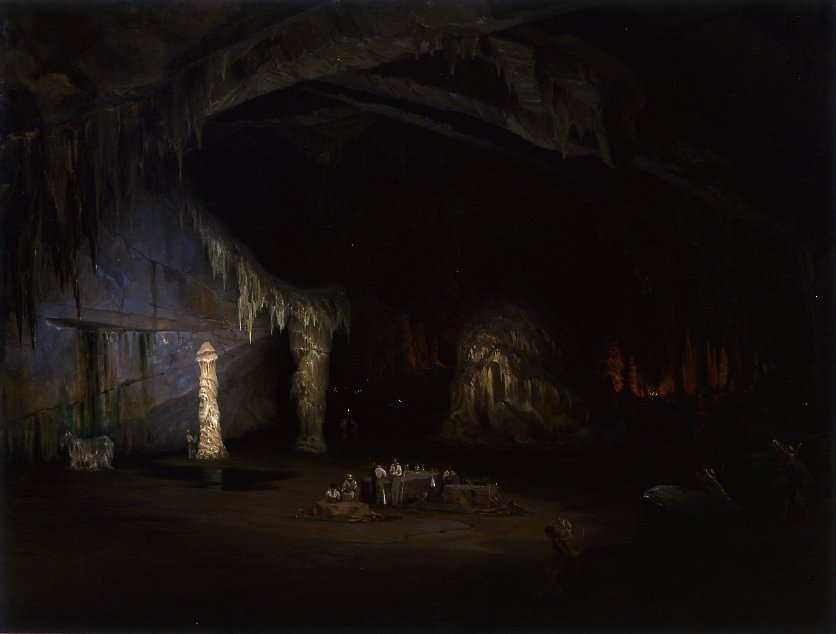
He was born in the darkness, far from the light of sun, moon, or stars. He knew not the elegance and nobility of mountain, valley, tree, and flower, or even the richly woven tapestry of the culture and artifice of humankind. But even so, he was born in the midst of love, and this mattered far more deeply. For a time it was even enough, until love spoke its word, as it always does, a word that wants to embrace the entire world and hold it close. His parents were exiles, imprisoned like so many others in the vast underground caverns beneath the Empire of Vælíria. A more unusual and harsh prison has probably never before been known, and its like shall rarely occur hence for all the ages of the world. Proving to be a death-sentence for many, it yet came to be a home—or at least a place in which existence could be sustained—for those who survived. His parents were among the survivors, criminals in the eyes of the Empire above, though they were condemned and imprisoned not for crime, but for disagreement, for taking an unfavorable stance toward the established government, or toward the Emperor himself, though concerning the specifics of this they never spoke. His mother, Milly, was with child whenever she and her husband, Daeran, were cast into the great prison, and they were still learning to survive in such a difficult climate whenever she brought her child into this world. And thus Albrýndaer was born into profound destitution and vulnerability; and yet at first he knew little of this, for as is the case with all children, his heart in the beginning needed nothing more than the love of mother and father, and their tender and abiding care. And this, in mysterious and undeserved goodness, he received.
It mattered not that the light that bathed the smiling face of his mother and the kind face of his father was that of flickering lamps, and that the dwelling that welcomed him—his home—was a narrow cave, sparsely furnished, with the immeasurable silence and sense of weight of thousands of tons of rock above that is so evident in underground caverns. What mattered was their faces gazing upon him with love, with gratitude, and with care; what mattered was the touch of their flesh against his own, whether the soft breast of his mother pouring out nourishment and life, or the calloused hands of his father, worn from work and yet holding Albrýndaer with a strength that was not violence but security.
What he knew of the world was dark and cold and rough, rugged stone and dim light and ceaseless chill, and even his bed was but a trough in the rock overlaid with a few tattered blankets. But his mother and father lay themselves on either side, and they spoke to one another with words whose meaning he did not understand but whose essence he felt; and they spoke to him, too, in tones much the same, and, as he would later learn, told him of the surface world, of its beauty and lightness, of its expansiveness and variety. And though they had little reason to hope for a return to this place, to the wideness of reality beyond the confines of their prison, they could not keep themselves from imparting to their son a love for this reality, and a longing for it. For even if the hope was more slim than a single thread of silk stretched to the point of breaking, they knew that without hope, man’s life is not worth living and has, in a sense, descended already into death.
But even as Albrýndaer grew and came to understand the words that his parents spoke to him, he could not form a clear image of the world above, the world drenched in the light of the sun during the day and the moon and stars at night, the world cloaked in grasses and trees and formed by mountains, hills, and valleys whose splendor made the human heart rejoice. No, he had no experience by which to measure these words, and so they meant little more to him than a memory of his parents, frail like a torch at the point of burning out, which to him was a promise likely never to be fulfilled. But he did know something else, and in this he found a hope even beyond the hope that they sought to communicate to him, and a wideness wider still than the expanse of all the world.
For the movement from the cradle of love in which he was conceived and born, and cared for from his earliest days, to the cradle of Love that held the world itself, was a short one. For him what was truly great and wide, rich and full, was love. It was not the landscape that he tried to picture in response to the descriptions of his parents; nor was it the contours of the dark caverns in which his years were spent. It was not even the culture and society of which he learned, the language he came to speak. Indeed, it was not even the people whom he came to know and for whom he cared, nor those who cared for him, though these stood to him above all the rest. Rather, in all and beyond all, as a light permeating all things, itself too pure and vibrant to be seen with normal eyes, and yet in which alone all things were seen, was the Love that had created the world and ceaselessly sustained it.
What he first intuited in the loving gazes and tender voices of his mother and his father, and in all their touches of care and of love, he came to see—with the sight of the heart—in all things that exist. Yes, and this Love, he knew, was not an impersonal force, some anonymous energy that flowed through all things; nor was it all things, as if all things were but one entity, just faces of a single being. No, this Love was distinct from all things that existed, from all that could be seen or known or felt in the natural ways of the world. And yet it was ever the ground of their existence and their goodness, a ceaseless gaze of cherishing tenderness that made them to be what they are at every moment, a gaze without which they would sink again into nothingness. This was a gaze that was wholly personal, a presence both intimate and transcendent, ever near and yet ever beyond, a Love that grounded all natural love and yet bore none of the traits of its weakness, fallibility, and mortality. It was a Love infinite and eternal, which cradled both ends of life and its every moment, and every single thing both material and spiritual, in its embrace and in the gaze of its cherishing and its care.
And it was in this Love alone that, for Albrýndaer, the light truly shone in the darkness, and the dim caverns of the prison that was his home became beautiful to him, and precious. Even if he did not have a landscape to look upon, stretching out in all directions, nor a sky wide above him, shining with celestial lights, he found in the arching caverns, in the detailed veins within the stone, in the resounding silence and the echoing sounds, and in the small civilization of prisoners that surrounded him, an inscape both deeper and wider than anything this world could offer. For he found something beyond the world, which lived through love in every thing that existed, and yet surpassed them all, as much, or rather more, than his mother, his father, surpassed him, and yet was the origin of his existence and sustained him through tenderness and never-ceasing kindness. If such was true of his earthly progenitors—and surely it was!—how much more true it is of the progenitor of all, whose generation is not of the flesh, even though flesh too is born of this Love, but of pure goodness, beauty, and truth outpouring from the plenitude of all Being. And this Love poured ceaselessly as a gift into him as if he were the only one, uniquely seen and loved, poured into the heart and life of Albrýndaer Hríndas, a child of darkness bathed in mysterious light.
† † †
Albrýndaer was a sickly child, though, all things considered, none could expect it to be any other way. When the only sources of light he knew were the flickering lamps that burned oil or grease and the dim luminosity of the glowing ore-veins that wove through the rugged stone of the caverns, it was inevitable that his body would suffer deprivation. When his diet was the little and imbalanced nourishment that could be scrounged from this subterranean climate—mushrooms and weeds that needed little or no light and creatures of the deep with tough meat—it was inevitable that his growing flesh would develop not hale and hearty but frail and emaciated. And yet the paradox was that his very weakness taught him strength and his very lack taught him to find abundance in little.
A child with pale skin, almost white, he had eyes a brilliant green that shone in a long yet deeply dimpled face, framed by ever lengthening hair the color of burnt copper or ebony ore, in other words, a brown that was hiding almost entirely in black. By the time he was four years old his hair reached to his waist, though often it was tied behind him in a knot or braid, so as not to obstruct his vision or activity, though at night it was let down to keep him warm in the ceaseless chill of the cave.
Physically he was not a beautiful child, but rather haunting, like a ghost in the darkness, his pale skin almost glowing as it refracted any sources of light, and his hair all but invisible. But to his parents he was beautiful, inside and out, though as they looked upon him they could not restrain their hearts from worry. How long could a child born in such a place and under such circumstances survive? The fear of his premature death remained with them always, and though this intensified their tenderness to him, it also created an atmosphere of anxiety which he undoubtedly felt, with the keen sensitivity that is proper to all young children, not yet numbed in response to the painful or corrupting events of later life.
“Specter” many began to call him, or heurin in the tongue of the Empire. His parents detested this practice, but they were unable to prevent it. Little as he was, he did not understand the name or its import, though its pejorative sense certainly lingered with him, at least as his budding mind began to open and the process of discovery expanded from sensate awareness and basic curiosity at the essences of things to the interrelationships between persons and the dynamics, both good and ill, by which people treated one another.
And he was a sensitive child, both in his natural disposition inherited from his mother and father and also in the circumstances of his earliest growth. For his existence was focused inward in a way rare in the history of humankind, narrowed almost to a pin-point. This caused him to feel and to process things more deeply than he would have otherwise, and he became profoundly and constantly perceptive, watching with keen eye and attentive mind, and with heart both desirous and vulnerable, every small event or reality that passed before his gaze, his ears, or his touch. As a blind person who is taught by another to project what they feel with their other senses into the reality of space, to visualize the vision of the eyes with the inner seeing of the heart, so too Albrýndaer learned quite quickly, partly through education and partly through the spontaneous impulse of his spirit, to see in all the little things that he encountered each day a depth and a breadth that few others were able to see, accustomed as they were to a wider and more superficial approach to life and existence.
His parents did not allow the unfavorable circumstances of his birth to impede him from growth, and, being themselves part of the noble, norándas class, they imparted to him an education as rich and as full as they could manage. Whether it was language or history or geography, ethics or the budding beginnings of philosophy (and children are the best and truest philosophers), they taught him all that they were able, or sought out teachers for him from the other cave-dwellers. An odd circumstance indeed, surely, but they understood deeply that life flows like a river down the generations, from person to person, from heart to heart, and that a man has nothing but what he has received, indebted as he is for his very life and knowledge to those who have preceded him, and above all to the author of his existence, whose gift creates a dependence that is not servility but freedom in self-possession and self-gift. This latter, however, Milly and Daeran did not acknowledge. Of all the virtues and forms of knowledge that they sought to impart to Albrýndaer, piety was not one of them. An organism without a heart or a house without a foundation, therefore, his life would have been, except that he received this knowledge from another even more trustworthy and solid source. If they supplied it not, nonetheless he had it, and had it in such a way that nothing could take it away were it not his own infidelity.
There were few books in the underground prison; but those that his parents could find they passed into their son’s hands. And he was an avid reader, devouring books in the cave’s dim light, finding in them one of his few links—and a vivid link—to the world outside the cave, to a world both alike and unlike the world in which he was born. He came to understand that he was a part of this world, a member of this society, and indeed a member of an Empire that claimed to be this society’s “greatest achievement,” though the circumstances of his birth gave the lie to such a claim. And if his skin was pale and his frame weak, marking him as a creature different, a creature of the underworld, of shadows and darkness, nonetheless he knew himself to be a man, a human being, a kin to all those who walked upon the earth, and his heart held a flickering flame of hope and desire to someday take his place among them.
Of all his studies, what fascinated Albrýndaer the most was philosophy, called by the people of Vælíria elasándra, the love of wisdom. Perhaps this was due to the circumstances of his life, since the journey of the mind found the constriction of the body to be not merely a hindrance but a catalyst. Or then again perhaps his fascination with elasándra was born and developed despite the circumstances of his life, and he found wonder and expansiveness even though little of the world was present to his gaze to stir such wonder. Be that as it may—and it was probably both—Albrýndaer was a reflective child, often so absorbed in thought that he was nigh oblivious to his surroundings, a distant look in his eyes. To get his attention others would need to speak loudly, to touch him directly, or to place themselves before his line of sight. His parents knew not what to make of these flights of thought, and though they sensed the budding depth within him, they also worried that his “absence” (though it was not truly absence) was due to undernourishment and poor health.
On the other hand, when he was called upon to turn his gaze to others, when his parents or elders spoke to him, or the very few who were nearer to his own age (though he was the youngest of all the underground dwellers), his distant gaze became an intense and almost uncomfortable directness of presence. His eyes seemed to pierce into the person upon whom their gaze was directed, not in criticism but in a curiosity, a longing, that was unsettling to all but a few. For Albrýndaer himself, of course, the two gazes—the distant and the piercing—were one and the same gaze, simply directed upon whatever drew his attention in a given moment. Those things beyond the eyes’ normal sight drew him just as strongly, or more strongly, than the things visible to his eyes, and he looked at them both with the same full-hearted and full-bodied presence that permeated his whole existence.
Such were his dispositions through his youth and into his adolescence. Even so, what has been explored of the tendencies of his heart and mind is but a gesture, for these things in his youth were but the seeds of what would blossom fully in later years, when childhood passed into budding manhood, and adolescence into full adulthood. Further, there were other things as well that affected him in his early life, things that had a deep and abiding influence upon him, some for good and some for ill.
† † †
He met Ílya early in his life, though in after years he could not remember either the precise time or circumstances of this encounter. Rather, it seemed to him almost as if he had always known her, as if she had always been there at his side from the very beginning. She was three years his senior, brought here by her father in his exile, though she was born in the world above. Her features were more akin to his than those of the others who lived in this cavern-dwelling, but considering that she had received exposure to the light of the sun and to the world above before being plunged into the darkness—and considering even how the pallor of her skin complimented her complexion rather than marred it—the impression she left was as if the opposite of that of Albrýndaer. If he seemed at first glance to be a specter, she seemed to be some creature of light, perhaps of the fae, or even an apparition of one of the Anaíon (though Albrýndaer knew nothing of these gods, being bereft of such knowledge through the intervention of his parents, who firmly resisted any conviction in the existence of deities beyond humankind). Ílya seemed to glow with a mysterious light that emanated from within, and her blonde hair framed her petite face and form in a beautiful way; but above all, her demeanor and her manner lifted all of this to a level of height and depth far more than physical. For she was a creature both of deep and sober presence and of unusual joy and cheerfulness.
Considering her situation, the habitual possession of such a character was all the more unexpected and all the more amazing. But as much as Albrýndaer was quiet and retiring, thoughtful and even somber, to the same degree Ílya was lighthearted and humorous, ever bringing light into the lives of those who found themselves in her orbit. If wonder at the mystery of reality stirred Albrýndaer to silence and quietude, so it stirred Ílya to playfulness and creativity, whether that be designing games or collecting rare plants or creating paints to scribe murals upon the walls of the cavern. And these two attitudes complemented one another perfectly, two aspects of the same awe, two responses to the same gift and the same wonder, that quiet movement and that silent song, that restful activity and that vibrant relaxation that mark the existence of all true children.
Albrýndaer found himself caught up into Ílya’s energy with an almost irresistible impetuosity, though in fact this was due only to the fact that he had no wish or desire to resist such a movement. For it awakened in him something profound and unique, unlike anything else in his life. A single glance of her eyes or a word from her mouth was enough to grasp him in the very depths of his pensiveness, lost in his own explorations of thought, and to draw him out into explorations also in body and in act.
By the time Albrýndaer reached his eighth birthday, the two of them were nearly inseparable, spending long hours of their days together when not occupied with other cares, though in the underground dwelling there were many of these. They would often explore the nearby tunnels, drawn, despite the warnings of their parents, by the sense of adventure and the yearning for discovery. Every new turn or every unexpected rock formation, every new plant or pool of water, was like a world unto itself only waiting for their beholding presence to unveil its mysteries and the delight that it held.
At other times they would simply find some sheltered alcove of stone or some patch of weeds growing in the dim light of the cave, and they would sit together talking of all kinds of things, unaware of the passage of time. In Ílya Albrýndaer found not only a source of energy and a spark of enthusiasm that drew out from within him capacities that lay recumbent, capacities for activity and play that otherwise he was little inclined to pursue. He also found in her an open ear and a listening heart far beyond anyone else in the encampment, and she would lovingly receive his long monologues on different topics that gripped his mind and imagination. Often she would interject with questions or comments in words that revealed not only the honesty of her listening but also the depth and acumen of her understanding. But he would listen to her also, to thoughts and aspirations that she expressed, or to struggles that she had with her father or with the work allotted to her, and in all circumstances he delighted to listen to her voice. Often he cared little what the particular topic of conversation might be, as long as he was allowed to hear the echo of her heart and her life sounding within his own.
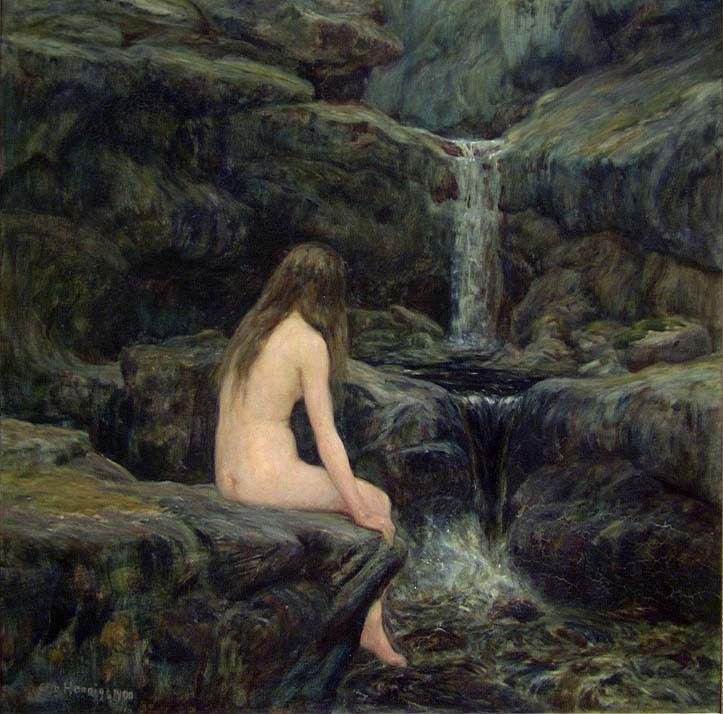
But other discoveries also unfolded for Albrýndaer through Ílya’s presence at the heart of the sacred sanctuary of friendship—so peaceful and serene, so safe and enduring—that blossomed in the space between their hearts and made them one in the “we” of mutual belonging. In the earlier years, before they had yet shared their deepest and most intimate conversations, when he was eleven years old, they bathed together in a pool of cold, crystalline water in the subtle, gentle light of the cavern, glowing veins of ore threading through the low ceiling of stone overhead. And though they had done this many times before—after all, Ílya had been with Albrýndaer nearly from the time he could speak—it had been almost two years since the most recent occurrence. And this time proved to be a different experience, or the awakening of something new in the context of what came before, like a flower blossoming in fecund soil or laughter and delight in the reciprocal exchange of loving gazes. For Ílya’s body in the previous two years had grown and matured significantly, and Albrýndaer himself had grown as well, and his mental and emotional maturity were always well beyond that typical for his age. When therefore he beheld her naked body in the gentle light that fell upon it, and saw the beauty of her unique, feminine features, a spark of wonder and awe was kindled within him.
He had seen the uncovered body of his mother before, but this moment was a new and deeper discovery, the opening of eyes that saw once, and yet learned that there was yet more to see even in what had already been seen. It was the first full awakening to something he had beheld without ever truly beholding it: and he knew now, in the deep intuition of the heart, the true beauty and sacredness of a woman’s body. And he thought to himself that there existed nothing more beautiful in the whole world, and even if he were ever to walk upon the surface of the overworld, and to look upon trees and mountains, hills and rivers, nothing would ever compare to what he beheld in that moment. The only things that surpassed such beauty as he then witnessed were those realities that transcended human sight, invisible and intangible even if glimpsed through what was seen and felt: the realm of the spirit rooted in the creating and sustaining Love that permeated all things.
But indeed even in beholding her flesh he saw more than flesh—the spiritual beauty that was uniquely her own, the beauty that he touched when he lovingly spoke her name. And in response to this beholding, one desire alone stirred within him, gathering all else together into itself. It was the desire to protect her with all of his strength and all of his capacity, that someone so beautiful would never be harmed or hurt, and that this beauty would shine undimmed unto its end and its consummation.
† † †
(continued after image)
A year or so after this event, they spoke together in the sleepy afternoon hour following upon the midday meal, before each of them was required again to return to their families and help with the chores and work of the day. Called the sétas, the seventh hour, it was a time in which the people of Vælíria often napped, and this custom, though lessened, continued even in the underground prison. Lying on their backs looking up at the dull light of the ore that wove through the stone hundreds of yards above their heads, they were at first silent, content simply to exist without the need for words. But after a while Ílya sat up and turned to face Albrýndaer who lay beside her. Seeing this, he sat up as well and, looking at her, asked, “What is it?”
“Often you seem to be elsewhere than here, Albrýndaer,” Ílya said to him, “as if your mind has gone off on some journey to a faraway place.”
“Are we not often silent like this?” he asked. “Why do you bring this up now?”
“I speak not of this moment, but of a disposition always with you,” she explained. “What adventures do you find in that head and heart of yours?”
“Adventures I guess you could call them, at least some of them,” he replied. “But sometimes rather I think I am in danger of getting caught in a cycle of pensiveness where the momentum stops and I do little more than think about thinking. Or think about things with little way of giving expression to them outside of me—which amounts to more or less the same thing.”
“What do you mean you cannot give expression to them outside of you?”
“Well, it is more that I feel little inclination or ability to do so,” he replied. “I feel content just to explore the inner world that is hidden within the outer. Whether that be sitting beside a pool of water, crystalline and pure, reflecting light even in a place of darkness. Or whether it be watching a beetle go about his work digging in the soil, or bats flying from cavern to cavern, or the simple play of the ore’s light upon the darker stone that surrounds it. I just settle down here and rest, content to let things be, and to be, myself, before them. It is almost like they live within me as I behold them, and this living only deepens the longer I remain in contemplation.”
“And what is so wrong with being content to do precisely that?” Ílya asked. “Is something lacking in this? After all, it seems to me that this knowledge is enrichment and fulfillment, abundance and life, even if ever pressing on to the ‘more’ that it cannot quite grasp.”
“Well, sometimes I feel as though all these things are asking something of me,” he attempted to answer, though struggling for adequate words. “I just do not know what it is.” Then, turning his gaze toward her, he added, “I suppose I see it in you. Whereas I think, and in thinking find joy, you live, and in living find life.”
“But what is the difference between the one and the other? Are they not both activity and both repose? Are they not both contemplation and both action, just in their own way?” Ílya asked. “The play of the mind and the play of the body, the play of leisure and the leisure of play?”
“They are the same thing, I suppose,” Albrýndaer replied, “but they are also different. I think that they just need each other. The world summons us to restful beholding, to thoughtful reflection. To imagination. To the journeys and adventures of the inner mind and heart, as you have said. But the world also summons us to playful activity, to getting our hands and our feet into the world itself, and to changing it and letting it change us. I want you to teach me the latter.”
“And I want you to teach me the former,” Ílya replied with a kindly smile.
After this she led him to a corner of the large cavern where, from a secret cranny in the stone wall, she drew forth some objects that she had there hidden. Looking upon them, Albrýndaer saw that they were small statues or figures of men and women, and of buildings, and of trees. Despite this, he asked, “What are these?”
“They are figurines,” Ílya explained, “by which I explore the world outside our prison. I have created a little game. Would you like to play it?”
“A game? I do not know if I have ever played a game before.”
“Oh, then you must! If you want to know things truly, you cannot know them only by thinking. You need to play them to really know them from the inside, most intimately and deeply.”
“Then let us play,” Albrýndaer concluded with a smile.
And so they did. Ílya explained to him that she had devised a game wherein a group of heroes—like those they had learned about in the tales of their elders or in the few books they had been able to read—set out on adventure to explore mysterious locations or to save and protect the innocent. A set of “rules” guided this game, for she had learned quickly that freedom flourished in limits and dissipated whenever it was unfocused. Freedom was creative whenever channeled to a point, awakening the striving for something good and worthwhile even if it be in a made-up game and an imaginative story. Freedom was not creative, nor even truly free, whenever it tried to cast aside all form and shape, whenever it tried to ignore all the contours of life and its drama from birth unto death, from moment unto moment, from day unto night and night unto day, from outside to inside and inside to outside, and from person to person. Here was the rich stuff of wonder and play, and the domain of freedom’s exercise and its flourishing. And in the midst of their shared play, crouching in the dim light of the cavern over the figurines that Ílya had carved, Albrýndaer learned much about the nature of life and freedom, of wonder and activity, that he could not have learned from thought alone.
Indeed, for many hours in the coming years he and Ílya did this, and the impression it left upon him was indelible. It changed him. And it changed her. He began indeed to play himself even when alone, getting lost for hours in some game or imagination, and his habitual pensiveness began to lose some of its heaviness and inertia while retaining all of its depth and stillness. But above all, as Albrýndaer and Ílya joined together in this way, their shared activity forged both of them together in a new and profound way, by joining their hearts and minds together in a shared wonder, in an activity that was fruitful precisely because it was gratuitous, and ordained to no end outside of itself. Its whole purpose lay in its delightful and lighthearted participation in the gaze and activity of creative Love, in being contemplation given flesh in the activity of hearts and bodies, which for all the ages of the world shall ever be called “play.”